
Buyer's Guide: How to Choose the Best Plastic Blow Molding Machine?
 In plastic packaging and container manufacturing, blow molding machines directly affect product quality, production costs, and competitiveness. Choosing suitable equipment is essential to long-term production performance. This guide explains the key purchasing factors to help you match a plastic blow molding machine to your needs.
The Importance of Choosing the Best Plastic Blow Molding Machine
Choosing the wrong blow molding machine can increase operating costs. The table below compares the potential consequences of different equipment choices:
| Evaluation Criteria | High-Risk Choice | Preferred |
|---|---|---|
| Initial Purchase Cost (CAPEX) | Low (seems to save money upfront) | Standard to high |
| Operating Energy Costs (OPEX) | Extremely high (no high-pressure air recovery; heat generated by high-pressure hydraulic oil flowing through relief valves) | Low (all-electric or servo systems with high-pressure air recovery; 30%–60% electricity savings) |
| Product Defect Rate | High (3%–10%) | Extremely low (<0.5%) |
| Frequency of Downtime for Repairs | High (many nonstandard parts and frequent breakdowns) | Low (standard components from major brands such as Siemens and Festo) |
| Compatibility with Post-Consumer Recycled (PCR) Materials | Poor (can only use 100% virgin material) | High (supports multilayer coextrusion and adaptive wall thickness control) |
| Overall Equipment Effectiveness (OEE) | Below 70% | Above 90% |
How to Choose the Best Plastic Blow Molding Machine
When choosing a plastic blow molding machine, start with your actual production needs:
Assess Your Production Needs
Before purchasing, define the product types, capacities, size ranges, weights, shapes, and requirements for dimensional accuracy and appearance. Specify whether the products need handles, special neck finishes, or multilayer structures.
Also list the materials to be used, such as HDPE, PP, PET, or PVC, along with your required monthly output, daily production hours, and future expansion plans. Use this information as the basis for selecting a machine.
Plastic Raw Materials
Different plastics have different processing characteristics. Use the following guidelines to evaluate common materials and molding methods:
- PET: Offers good clarity and strength and is commonly used for beverage and mineral water bottles. Consider two stage PET stretch blow molding (SBM) machines first.
- HDPE / PP: Offer resistance to acids and alkalis and good toughness. They are commonly used for milk bottles, detergent bottles, and chemical drums. Extrusion blow molding (EBM) machines are recommended.
- PC / PS / PMMA: Used for medical devices or high-end pharmaceutical bottles, often produced with injection blow molding (IBM) machines.
Blow Molding Machine Capacity and Efficiency
Confirm hourly good-part output using your specified material, container weight, and molds. Account for mold changes, maintenance, startup adjustments, and defects, and allow a buffer for order fluctuations.
Level of Automation
Semi-automatic machines typically require a lower initial investment and have a simpler design, but need more manual intervention. They suit low- to medium-volume production, multiple product types, trial runs, or environments with lower automation needs.
Fully automatic machines reduce manual handling and operation. They suit production lines with steady output, continuous production, and a need for greater consistency. However, the initial investment and the cost of integrating the entire production line are usually higher.
Energy Consumption and Operating Costs
Blow molding machines run for long hours, making electricity one of the main operating costs. When choosing a machine, look for energy-saving features such as servo motors and variable frequency drives, and consider the heating system's efficiency. Although energy-efficient models may cost more upfront, lower electricity bills can offset the price difference over time.
Mold Compatibility and Ease of Mold Changes
Confirm that the machine’s mold mounting dimensions and clamping force meet the requirements of both current and future molds. Also assess the time and labor needed for mold changes to avoid reducing machine utilization.
Machine Stability and Durability
Test production materials and molds during continuous operation, checking cycle times, product weight, wall thickness distribution, and defect rates against quality and output targets.
Also review maintenance records and wear-part replacement intervals from comparable machines already in service.
Operator Interface and Ease of Use
The operator interface should clearly display temperature, pressure, cycle time, and alarm status. It should also support your required languages, recipe storage, user permission settings, and error log tracking, making it easy for operators to adjust process parameters and troubleshoot issues.
Manufacturer Reputation, After-Sales Service, and Warranty
When evaluating a manufacturer, review examples of similar equipment installations and customer feedback on machine performance and repair services. Also ask about warranty coverage, parts replacement terms, and whether on-site installation and training are available.
Budget
Your budget should cover the machine, molds, auxiliary equipment, shipping, installation, factory water and electrical setup, and staff training. When comparing quotes, list these items individually to confirm the total setup cost of each option.
Common Buying Mistakes and Key Considerations
When buying a plastic blow molding machine, compare prices and specifications, and also evaluate how the machine performs under actual production conditions:
1. Overlooking Long-Term Operating Costs
The machine’s purchase price is only part of the total cost. Ongoing expenses for electricity, compressed air, cooling, and maintenance also affect overall spending. When comparing models, ask suppliers for energy consumption data based on the same material, bottle design, and production output. Then estimate long-term costs using your factory’s operating hours and electricity rates.
2. Ignoring Actual Output
Published output figures may reflect specific test conditions. Confirm whether they represent actual bottle production or dry-cycle performance. Pressure fluctuations, temperature variations, defects, and bottle jams can reduce saleable output.
3. Bigger Tonnage or Horsepower Is Not Always Better
A larger clamping unit or motor does not automatically improve durability or production stability. Oversized equipment can increase purchase costs, while motors operating well below their rated load may lose efficiency.
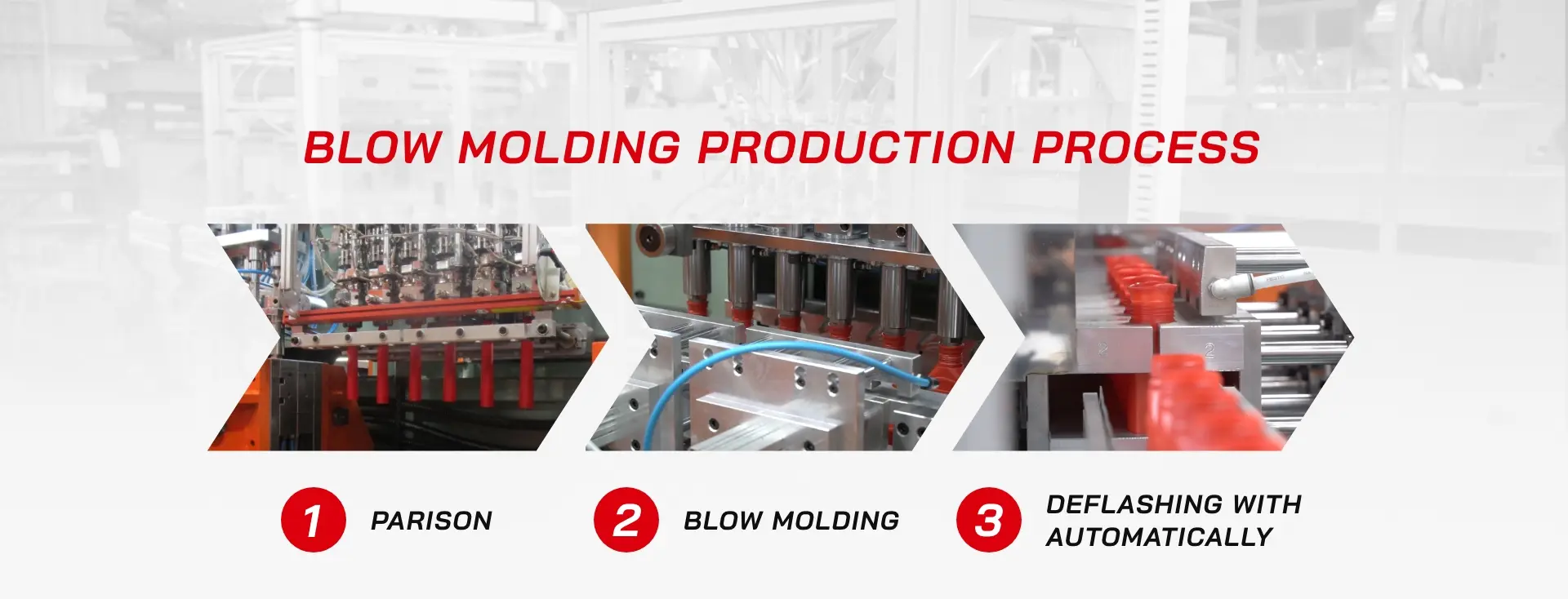
4. Overlooking Parison Wall Thickness Control
In extrusion blow molding, poor parison wall thickness control can force manufacturers to use extra material to maintain the required minimum wall thickness. A suitable control system helps reduce material waste and may shorten cooling time.
5. Failing to Confirm Spare Parts Availability and After-Sales Support
If replacement options are unavailable for PLCs, servo drives, high-pressure valve assemblies, or specialized sensors, a failure may lead to longer repair times and a greater risk of downtime.
Before purchasing, confirm component brands and model numbers, the availability of alternatives, stock levels for commonly used spare parts, lead times, warranty coverage, and remote or on-site repair support.
FAQ
Q1. Should I Choose an All-Electric or Servo-Hydraulic Blow Molding Machine?
All-electric machines: Eliminate hydraulic oil from the drive system and can reduce noise and energy use. Cleanroom models suit hygiene-sensitive production, but initial costs may be higher.
Servo-hydraulic machines: Offer high clamping forces at competitive prices, making them an option for large hollow parts.
Q2. Should I Choose a One-Step (ISBM) or Two-Step (SBM) PET Blow Molding Machine?
One-step injection stretch blow molding (ISBM): Forms and stretch-blows perform in one machine using retained heat after temperature conditioning. It suits premium cosmetic, pharmaceutical, and irregularly shaped bottles. Reduced handling helps limit scratches and contamination. Assess the combined production cycle and tooling costs.
Two-step stretch blow molding (SBM): Reheats and blows previously cooled preforms, purchased or produced separately. It suits high-volume water, carbonated drink, and edible oil bottles, with flexible preform sourcing.
Conclusion
When choosing a plastic blow molding machine, consider your production needs, material properties, and long-term costs together to find a machine that can deliver stable production over the long term.
Since its founding in 1992, Full Shine has focused on developing and manufacturing plastic blow molding equipment. Its product range includes automatic extrusion blow molding machines, PET stretch blow molding machines, and one-step injection blow molding machines. Full Shine also provides after-sales service to meet container manufacturing needs in the food, household products, pharmaceutical, and cosmetics industries.
Share your product types, capacity requirements, and budget with Full Shine. Its team can help you select a suitable blow molding solution for stable, long-term production. Contact Full Shine today to discuss your blow molding equipment needs.